Category: Thrivable Future Salon

  • Ceptr @ Thrivable Future Salon

    Ceptr @ Thrivable Future Salon

    Ceptr a building block for a semantic, mashable, fully decentralized Internet.
    Please register for the Ceptr Thrivable Future Salon on Wednesday 20th of January at IFTF in Palo Alto. 

    As Buckminster Fuller said: You never change things by fighting the existing reality. To change something, build a new model that makes the existing model obsolete.
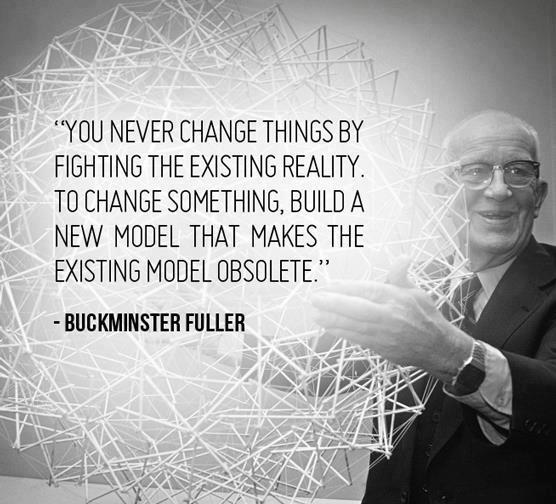
    Buckminster Fuller

    Are you interested in blockchain-like technology? Do you want the infrastructure resilience of becoming decentralized? Do you wonder, given how broken things are, if there is a viable plan to replace it with something better? Are you curious about how new possibilities in our technology create new social contracts or vice versa?

    Come and join us Wednesday 20th 6-9pm at the Institute for the Future, IFTF 201 Hamilton Avenue, Palo Alto [map] to learn about and discuss Ceptr, a building block for creating a semantic, mashable, fully decentralized internet. Sounds more thrivable to us! Thank you IFTF for opening your doors for us. 

    Ceptr is a rebuild of much of the computing stack optimized for decentralized sense-making, computation and composability. This means semantics baked into the lowest levels of memory storage, self-describing protocols which let anything talk with anything else, blockchain-like abilities for decentralized data storage and computation.

    Arthur Brock, a cocreator of Ceptr will be on hand. We will have an unpanel discussion followed by an open discussion and break out groups. We will kick off the discussion with unpanelists:

    • Kevin Marks, co-organizer of HomeBrew Website, Microformats, and Indie Web.
    • Matthew Schutte, collaborative internet advocate.
    • Deb Schultz, co-founder of YxYY, speaker on our new social contract.

    The larger implications are, as always, with deep engagement with you the audience. Expect breakouts to focus on the technology, behaviors we want to enable socially, and how tools like Ceptr can increase our resilience/thrivability. There is something to discuss on this whatever your interests might be.

    Not to be missed. Don’t fret if you can’t be there in person. We will stream the Ceptr Thrivable Future Salon. We will make sure to cover questions that you raise on the webcast. The webcast gallery chat alone is worth logging in for.    

    See you all there,

    Jean & Mark.

    P.S. Yes for Old Lang Syne we will walk down the street to Pizza My Heart to continue the conversation 🙂 We may even sing Old Lang Syne on the walk over there 😉

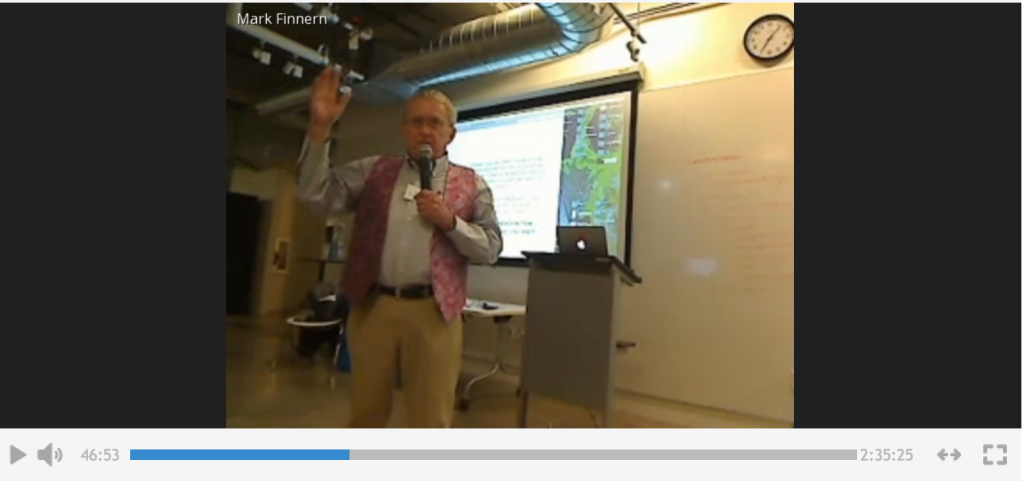
    P.P.S. Note for TFS history: It was Arthur Brock’s event where Jean and Mark meet for the first time several years ago! Thanks Arthur! Here is Mark’s Wealth a Living Systems Model post about Arthur’s work back then, plus the video:
  • Let’s continue the Learning Revolution started by Jay Cross

    Let’s continue the Learning Revolution started by Jay Cross

    Just got the sad news that Thrivable Future Salon speaker Jay Cross suddenly died. We don’t know the details yet, but wanted to share his great spirit from last month at the Thrivable Future Salon where he unveiled his new book:

    Real Learning: The missing manual for the do-it-yourself learner.


    We are very glad that we recorded the session via Spreecast and are able to share a video of his presentation, and, with that, the call for the learning revolution in his own words:

    Jay Cross presenting at the Thrivable Future Salon October 2015
    Jay Cross presenting at the Thrivable Future Salon October 2015

    Couple of highlights:

    • He needs our help to spread the details about Real Learning, as he wants a couple of million people using these ideas by next year.
    • In this world working and learning are converging.
    • Do the exercises, in the book, as this is experimental learning, not regular learning.
    • Informal learning people didn’t know what to do with it. It was handing the keys to the worker rather than the manager.
    • Lots of scientifically proven things improve learning: If you have a lightbulb graphic in front of you, then you are 15% more creative.

    Q: Learning versus Brainwashing?

    • People should be in charge of their own lives. The more they know about themselves the more they know what they want to do.
    • Experimental learning is like the Sierra Nevada and school learning is like the North Pole.
    • School convinces us that you have to learn the curriculum to get a certain grade and it isn’t worth shit to lead a better life.

    Q: You went to Harvard?

    • Yes, my 50th anniversary is coming up.

    Q: Why not creating a school from your idea.

    • School is a place where you get programmed. I love some schools, but I went to Stanford a few months ago, and I hear people speak from the national science foundation. MIT is writing this up … everything we know about how people learn was violated. They are talking about: “Well, we got to be more open,” but they didn’t take a question until 4 hours into the event.

    In summary real learning is not happening in the classroom. Please check out and implement the proven idea from Jay’s latest book: Real Learning they will help you to live a better life.

    There is no better legacy than having us improve, and continuing to improve, people’s lives via your ideas.

  • 5+5[+5] Sessions Oct 14 Thrivable Future Salon

    5+5[+5] Sessions Oct 14 Thrivable Future Salon

    San Francisco Sunrise this morning 13th of October
    San Francisco Bay Sunrise 13th of October 2015

    We love the diversity of sessions that participants are going to present, tomorrow, Wednesday 14th of October at the Thrivable Future Salon [register now].

    After an introduction to Thrivability and the Future Salon we are having 5+5[+5] open mike sessions: 5 minute of introduction to a theme. 5 minutes of discussion in the room, and if the activity in the room is high, we add another 5 minutes to the discussion before we start the next session.

    Here is the lineup:

    Regenerative commons — Aaron Haldiman

    The regenerative commons is a concept which seeks to shift public spaces such as local parks, from existing as government maintained spaces that we visit to integrated commons which we share ownership and maintenance. The goal is to create robust food production systems, harvest and store water, build soil, educate and empower the local community, produce local energy, etc. Using functional systems, education, and empowerment, these under utilized communal hubs (parks) can become the village commons that meet the needs of the local community to create deep resilience and minimize dependence on centralized systems for food, water, energy, etc.

    Take away: Our communal structures can be redesigned to create dynamic community resilience

    Consequences of Unlimited, and Free, Clean Energy, here in less than 20 years — Paul C. Hoffman

    Washington Post ran story on this a year ago. This is coming. Discuss what this will mean for planet. Can suck massive amounts of carbon OUT of atmosphere; end global warming. Can provide ample water, food, for all. End involuntary poverty.

    Take away: Learn exponential thinking. The Future is vastly better than most people currently are aware.

    Real Learning — Jay Cross

    Learning and work are converging. Corporations tell people they are responsible for their own learning but give them no help. Learning is not schooling, but that’s the common assumption. I’ve set up the Real Learning project for DIY learners to enable bottom-up learning.

    Take away: You can learn to work smarter and boost your intelligence.

    People Centered Internet — Mei Lin Fung

    Digital disruption of ways to earn income opens up space for new approaches. What if we could use the convergence of the mobile phone and banking in order to disrupt project financing ? If we make it possible for micro financing of projects by individuals or team to be transacted and tracked over the mobile phone, we can find those people who are most successful at taking in $’s and generating outcomes which are good for humanity. And how might we do that? Track project outcomes along the 17 dimensions of the UN Sustainable Development Goals.

    Take away: Every voice, every person has something to contribute – people, organizations, global entities

    The Pivotal Way: Our style of work, software & data — Greg Chase 

    This is a brief overview of Pivotal Software including our unique way of working and providing software to companies. Perhaps this is a way to improve thrivability, if used right in the corporate world.

    Take away: A better way for companies to work

    Thrivable Systems must be Free — Travis Wellman

    Why the architecture of global connective systems has to be different than people-with-accounts-on-web-servers for the emergence of liberating (free) human systems. The answers are old, but have not been adequately popularized. We missed the bus. We need to somehow get excited about old ideas again to build the platform right.

    Take away: The answers are not new.

    Basic Innovation Income — Mark Finnern

    It makes economic and societal sense to provide basic innovation income to everyone on the planet for a transition to a post-scarcity society. It will allow everyone to focus on thriving for themselves and their community.

    Take away: Basic Innovation Income kickstarting a thriving world of abundance.

    Co-Creation — Jean M Russell

    How do we move across the spectrum of cooperation and collaboration to co-creation?
    It means being leader-full rather than leaderless. It doesn’t mean co-creative on all dimensions. Dictate goal, process, or participants.

    Take away: Try to be co-creative, leaderfull, and clear on process

    The sessions we don’t get to tomorrow will be covered in the next one.

    Join us tomorrow 14th of October Thrivable Future Salon in San Francisco at Pivotal Labs.