I would like to invite the Future Salon community to an experimental POW! Network* event this Sunday 26th of July at 6 pm.
Here is the framework:
Come together to watch an impactful movie.
Discuss the lessons learned from it right after.
Collectively come up with at least one concrete action that we all can do to impact the situation.
The goal is to go beyond just being informed about a situation, but produce a collective impact together.
Will we come up and agree on a joint action? We don’t know yet, but it is worth a try.
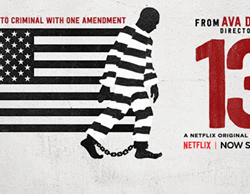
Please join us for this experiment. This Sunday at 6 pm we will watch the 13th documentary film, which some call the most influential and timely movie of the year.
Once you installed the extension, an NP shows up next to the right of the URL bar in your browser. It is usually greyed out may be hidden in a dropdown menu. It lights up red once you are on Netflix.
On Sunday we will share our Netflix Party URL with you. Unfortunately, you need to be a Netflix subscriber to be able to participate.
*POW!(Power Our World) Network is an initiative spearheaded by Zann Gill & team which I am part of. It is tracking and influencing the impact of great films committed to the environment and social justice.
Holo/Holochain is the next level blockchain platform that enables truly distributed internet, rooted in agent centricity, which allows you to be in charge of your own data. More details in Jean’s Medium post Get Oriented: 7 Posts on Holochain and Holo.
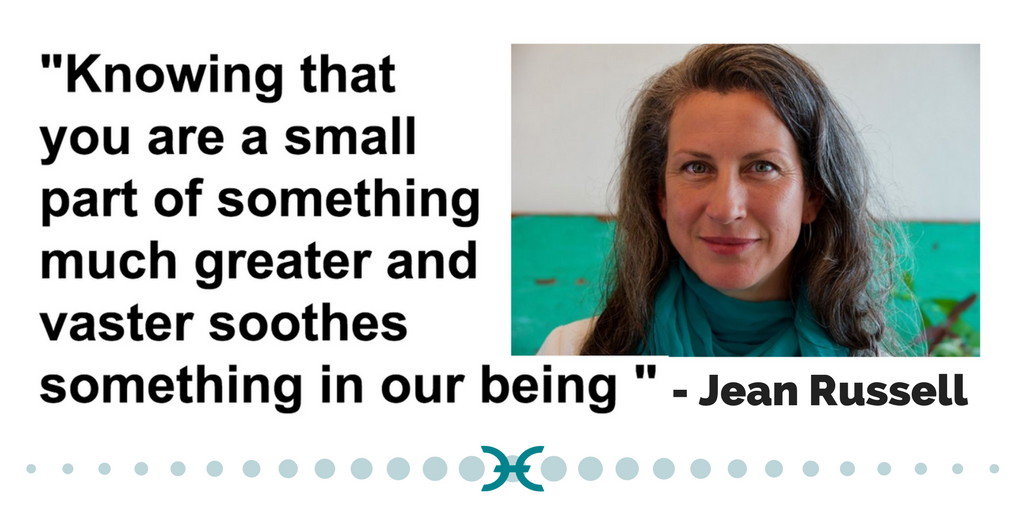
Jean Russell, project lead for the Holo ICO, will introduce Holochain and lead our conversation. Ms. Russell has been championing thrivability for a decade, with several published books on the topic, the most recent of which describes emerging organizational design and culture practices. She brings her skills and vision to the Holochain project where living system principles are being deeply woven into the design of a distributed computing crypto-platform.
We will do our best to webcast the event, but the best is to be there in person 🙂
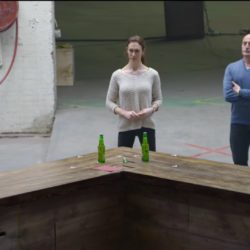
Most everybody loves the new World’s Apart Heineken commercial that is showing us in an experiment how to bridge the political divide.
If you haven’t seen it, check it out here, I’ll wait 😉
The experiment proves, that the willingness to sit down and listen to get to know the other person and their viewpoint greatly improves, once you solved a problem shoulder to shoulder together.
How can we scale this? And boy do we need it. I read about a study that just came out showing that the distrust between Republicans and Democrats is larger than it is between Israelis and Palestinians. [Take that with a grain of salt, as I am struggling to find it. If you do please post in the comments.]
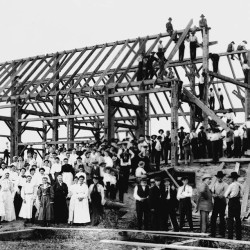
The Twin Towns or Sister Cities, as they are known in the US, movement really helped Europe to come together again after the devastation of the second world war. A couple of months ago I shared my idea in the Sister City Barn Raising post. Such a connection and cultural exchange would really lead to a greater understanding between liberals and conservative citizens. Now most larger cities even in the midwest tend to be democratic.
I have since refined my idea to do the exchange between high schools from red and blue voting districts and have the students work together on a project:
Sister High School Barn Raising would be a week long high-school exchange. I think 10th or 11th grade would be ideal. A predominantly liberal high-school connects with a high school from a mostly conservative area of the country.
At the beginning of the school year, the classes connect via video conferencing and get to know each other. Then they come up with a “barn raising” project that they would like to tackle when they are visiting each other later in the year. They are old enough to come up with such a project on their own. The focus of the project should be to create something that is for the benefit of the school or the larger community where the school is located.
The rest of the school year is spent preparing for the two projects: making a budget; creating a project plan, securing the funding; learning the skills that are needed to succeed with the project and so on. Then, towards the end of the school year, when they visit each other for a week, they can hit the ground running, working shoulder to shoulder to create their “barn”. I envision a buddy system, that the students visiting are living in the families of their buddy from the other school, which also ensures a much deeper understanding of the circumstances of the other student.
At the end of each visiting week, there is going to be a big party where everyone, even non-school people, are invited to come and celebrate what the students created. Some of the students may have focused on the party all week, created food, rehearsed music together, maybe even developed a play or musical that they perform that night.
These two weeks of working and living together will open up the eyes of everyone involved. They will realize, that their hopes and dreams are not that far apart: Living a good life, raising a family, creating things, coming together and celebrate.
Having grown up in Germany, therefore not even having first-hand experience with the High School system here in the US, I don’t think that I am the most qualified person to make this idea come to fruition.
Which organization has as their mission to create greater understanding and collaboration among our youth? Ideally with close ties to school administrations. Please comment if you know of any and introduce them to Sister High School Barn Raising.
Since the election there is a lot of soul searching going on about what went wrong and what can be done to get back on track. The two camps are drifting further and further apart. Red states and blue states seem less and less to get along. But we have so much in common: Love of our families, our country, our friends, music, and to make this country a better place for our children. Sister City Barn Raising is an idea, that is not fully formed yet, but would be a very cool way to have joint experiences and celebrate our common ground.
After the second world war, one of the ways the countries overcome their hatred for each other was by building partnerships between cities. Twin Towns or Sister Cities, as they are known in the US, were formed and cultural and economic exchanges were formed.
I grew up in Schramberg, a small town in Germany. One of my most memorable events of my youth was a trip to Whitby in York. Together with our amazing teacher Raviol we organized that trip in 11th grade. We stayed for a week with families that had kids our age. Of course, we played them our music: Falco Der Kommissar and to this day we laugh about their reaction: “Where is your Kate Bush? She is rubbish, but much better than this.” To live for a week among the Brits really opened my eyes to the larger world and made me understand them better.
How about we organize such kind of exchanges between predominant republican cities and more liberal cities and towns. How about a week long high school student exchange?
Last week at the Social Innovation Summit they had an excellent breakout about Maker Cities moderated by Peter Hirshberg with panelists Sherry Huss, Mark Muro, and Kate Sofis. Listening to that panel it clicked. The Sister City exchanges should not only be to follow the twin town kids in school and visiting local tourist attractions, but it should be like a barn raising. The community of the two cities coming together around a common goal that helps the whole community.
Here is how it could look work: at the beginning of the year, the students collaborate with the Sister City school and agree which barn they want to raise aka which problems they want to tackle during the week that they are together in either city. One possible project could be funding and building a Makerspace at their school.
Throughout the year the students prepare for that week of working together, so that they can hit the ground running once they meet. At the end of that week, there is going to be a big barn-raising party to celebrate all the things that have been accomplished. Some of the students may choose to make music together or develop their own theater piece to be performed during the celebration.
As I said in the beginning, Sister City Barnraising is an idea that could be implemented in all kinds of ways. Joined summer camps, festivals, economic collaboration, … <insert your idea here>.
Greater understanding and hopefully friendships will form from these joint experience together. Cultural and economic ties will be strengthened, a win win for everyone involved.
Can’t wait to see you all tomorrow Wednesday 20th of January 6pm for our: Ceptr @ Thrivable Future Salon at the IFTF in Palo Alto. Register now if you haven’t yet.
Ceptr is a toolset for building semantic, mashable, fully decentralized applications. As Bitcoin goes through a rough patch, Arthur Brock suggests a fractal method focusing on autonomous distributed processing as a more viable and scalable approach than global ledger consensus. Ceptr is a better way forward.
Some logistics for tomorrow:
We created a ride sharing document. Please use it to coordinate. We have people who want to come but lack transit!
Thanks to IFTF for providing sodas and water. We have limited donations for beer and wine. Please help out by bringing snacks, beer & wine to share to tide us over until…
Afterwards, we will march to Pizza My Heart down the block at the end. Fill your stomach then!
Agenda
Door open and networking 6pm
Starting 6:15pm
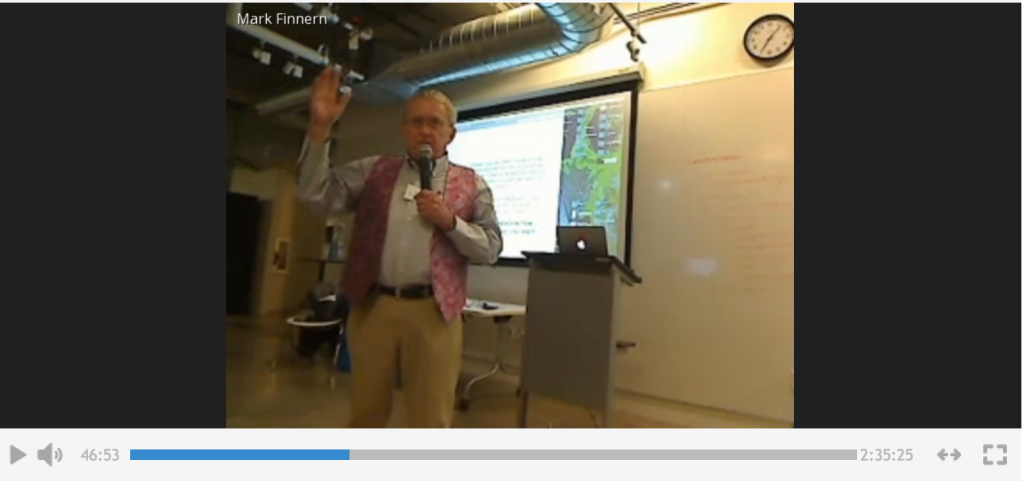
Welcome and Thrivable Future Salon History from Mark
Continue discussion over a slice of pizza and a beverage of your choice.
We can’t wait to see you all there.
P.S. Can’t be there in person? Join the Ceptr Thrivable Future Salon Spreecast for remote participation. We will do our best to include you in the discussion.
Brass off? Not what you think. You see, everyone coming to the Thrivable Future Salon [TFS] works hard on making this world a better place.
Sometimes it can be a bit dry and technical, the positive future may seem far away, and it looks uncertain whether we will ever get there. But one thing is for certain, we are going to have fun all the way! 🙂
For years we would come together for the Future Salon at SAP. At around 9pm once we closed there, a core group of people would continue the amazing discussion by going to Pizza My Heart on University Avenue in Palo Alto.
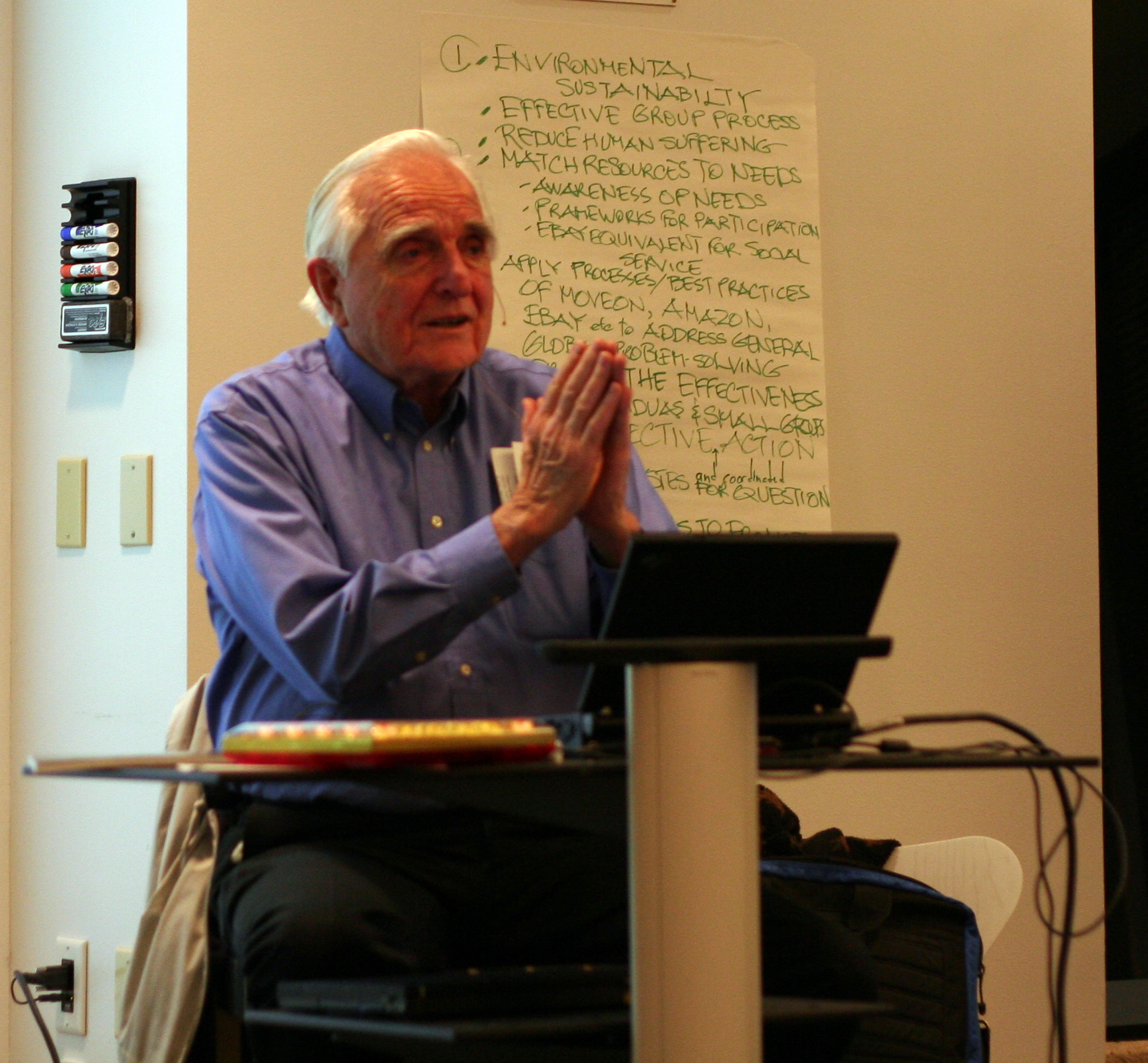
Doug Engelbart, for example, loved it. We talked all night, until they closed shop, and then we continued on the sidewalk. He would be really energized and say, “these are my people.” I think this was one of the reasons he joined us at the Accelerating Change conference as well as doing a second Future Salon.
This month’s Ceptr TFS on the 20th of January is hosted by the friendly folks at the Institute for the Future IFTF in Palo Alto. Turns out, they are located literally down the block from Pizza My Heart.
Therefore, for Auld Lang Syne, we will march down to Pizza My Heart, once we are done at IFTF. If we are marching anyhow, why not have a little make shift Brass Band leading the way? Please dust off your old trumpet/clarinet/trombone/drum … even if you haven’t played since high school, or especially if you haven’t played since high school. Bring it with you and join the TFS Marching Band.
It is a short block, 2 songs should do.
I recorded Auld Lang Syne with some wrong notes and all. Hope that sets the tone and takes the fear away that you may not be good enough to be part of it. If you can half way play the tune, you are in! The second song is: Oh When The Saints:
Let me know if you bring an instrument, or if you are in need of one. I will come with a soprano Sax and one more person promised to bring an alto. The more the merrier. Let’s Brass Off.
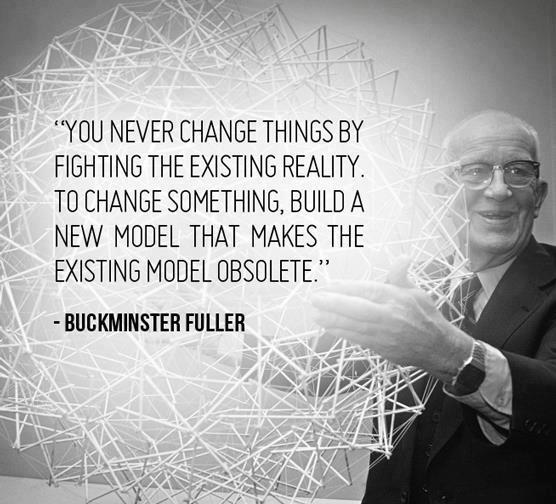
As Buckminster Fuller said: You never change things by fighting the existing reality. To change something, build a new model that makes the existing model obsolete.
Are you interested in blockchain-like technology? Do you want the infrastructure resilience of becoming decentralized? Do you wonder, given how broken things are, if there is a viable plan to replace it with something better? Are you curious about how new possibilities in our technology create new social contracts or vice versa?
Ceptr is a rebuild of much of the computing stack optimized for decentralized sense-making, computation and composability. This means semantics baked into the lowest levels of memory storage, self-describing protocols which let anything talk with anything else, blockchain-like abilities for decentralized data storage and computation.
Arthur Brock, a cocreator of Ceptr will be on hand. We will have an unpanel discussion followed by an open discussion and break out groups. We will kick off the discussion with unpanelists:
Kevin Marks, co-organizer of HomeBrew Website, Microformats, and Indie Web.
Deb Schultz, co-founder of YxYY, speaker on our new social contract.
The larger implications are, as always, with deep engagement with you the audience. Expect breakouts to focus on the technology, behaviors we want to enable socially, and how tools like Ceptr can increase our resilience/thrivability. There is something to discuss on this whatever your interests might be.
Not to be missed. Don’t fret if you can’t be there in person. We will stream the Ceptr Thrivable Future Salon. We will make sure to cover questions that you raise on the webcast. The webcast gallery chat alone is worth logging in for.
See you all there,
Jean & Mark.
P.S. Yes for Old Lang Syne we will walk down the street to Pizza My Heart to continue the conversation 🙂 We may even sing Old Lang Syne on the walk over there 😉
P.P.S. Note for TFS history: It was Arthur Brock’s event where Jean and Mark meet for the first time several years ago! Thanks Arthur! Here is Mark’s Wealth a Living Systems Model post about Arthur’s work back then, plus the video:
Just got the sad news that Thrivable Future Salon speaker Jay Cross suddenly died. We don’t know the details yet, but wanted to share his great spirit from last month at the Thrivable Future Salon where he unveiled his new book:
Real Learning: The missing manual for the do-it-yourself learner.
We are very glad that we recorded the session via Spreecast and are able to share a video of his presentation, and, with that, the call for the learning revolution in his own words:
Jay Cross presenting at the Thrivable Future Salon October 2015
Couple of highlights:
He needs our help to spread the details about Real Learning, as he wants a couple of million people using these ideas by next year.
In this world working and learning are converging.
Do the exercises, in the book, as this is experimental learning, not regular learning.
Informal learning people didn’t know what to do with it. It was handing the keys to the worker rather than the manager.
Lots of scientifically proven things improve learning: If you have a lightbulb graphic in front of you, then you are 15% more creative.
Q: Learning versus Brainwashing?
People should be in charge of their own lives. The more they know about themselves the more they know what they want to do.
Experimental learning is like the Sierra Nevada and school learning is like the North Pole.
School convinces us that you have to learn the curriculum to get a certain grade and it isn’t worth shit to lead a better life.
Q: You went to Harvard?
Yes, my 50th anniversary is coming up.
Q: Why not creating a school from your idea.
School is a place where you get programmed. I love some schools, but I went to Stanford a few months ago, and I hear people speak from the national science foundation. MIT is writing this up … everything we know about how people learn was violated. They are talking about: “Well, we got to be more open,” but they didn’t take a question until 4 hours into the event.
In summary real learning is not happening in the classroom. Please check out and implement the proven idea from Jay’s latest book: Real Learning they will help you to live a better life.
There is no better legacy than having us improve, and continuing to improve, people’s lives via your ideas.
The very night I was talking about self-driving cars taking over the transportation industry and its jobs, many Tesla cars got their software updated and have now an autopilot mode. Apparently every Tesla built in the last 12 months has 12 sensors including HD cameras.
The Tesla fleet is a self learning network, as most likely every car is sending back their recording to Tesla. That needs to be confirmed. As a Tesla driver, it would make me a bit uneasy to know that my every move is HD tracked. On the other hand, I would be stoked about the constant improvements that Tesla will be able to generate based on the data gathered from all of the Teslas. To be continued. We are living in interesting times.
One of my favorite moments was when Pete, at the beginning of his session about Wikipedia, asked the audience how many people have ever updated Wikipedia. Almost all hands went up. That is the attitude of the Thrivable Future Salon participants: We are improving the world even with small or large entries on Wikipedia.
If you got inspired to present your own ideas towards a more thrivable world, please fill out this Suggest 5+5[+5] Minute Thrivability Session form, and we will contact you regarding our next one.
Augustin loved our Thrivable Future Salon; Jean and I did too. Alas we know that there is room for improvement. You can help us by filling out this short questionnaire.
Make sure to be on our mailing list and share this post with folks that are interested in building a thrivable world with us.
We love the diversity of sessions that participants are going to present, tomorrow, Wednesday 14th of October at the Thrivable Future Salon [register now].
After an introduction to Thrivability and the Future Salon we are having 5+5[+5] open mike sessions: 5 minute of introduction to a theme. 5 minutes of discussion in the room, and if the activity in the room is high, we add another 5 minutes to the discussion before we start the next session.
The regenerative commons is a concept which seeks to shift public spaces such as local parks, from existing as government maintained spaces that we visit to integrated commons which we share ownership and maintenance. The goal is to create robust food production systems, harvest and store water, build soil, educate and empower the local community, produce local energy, etc. Using functional systems, education, and empowerment, these under utilized communal hubs (parks) can become the village commons that meet the needs of the local community to create deep resilience and minimize dependence on centralized systems for food, water, energy, etc.
Take away: Our communal structures can be redesigned to create dynamic community resilience
Washington Post ran story on this a year ago. This is coming. Discuss what this will mean for planet. Can suck massive amounts of carbon OUT of atmosphere; end global warming. Can provide ample water, food, for all. End involuntary poverty.
Take away: Learn exponential thinking. The Future is vastly better than most people currently are aware.
Learning and work are converging. Corporations tell people they are responsible for their own learning but give them no help. Learning is not schooling, but that’s the common assumption. I’ve set up the Real Learning project for DIY learners to enable bottom-up learning.
Take away: You can learn to work smarter and boost your intelligence.
Digital disruption of ways to earn income opens up space for new approaches. What if we could use the convergence of the mobile phone and banking in order to disrupt project financing ? If we make it possible for micro financing of projects by individuals or team to be transacted and tracked over the mobile phone, we can find those people who are most successful at taking in $’s and generating outcomes which are good for humanity. And how might we do that? Track project outcomes along the 17 dimensions of the UN Sustainable Development Goals.
Take away: Every voice, every person has something to contribute – people, organizations, global entities
This is a brief overview of Pivotal Software including our unique way of working and providing software to companies. Perhaps this is a way to improve thrivability, if used right in the corporate world.
Why the architecture of global connective systems has to be different than people-with-accounts-on-web-servers for the emergence of liberating (free) human systems. The answers are old, but have not been adequately popularized. We missed the bus. We need to somehow get excited about old ideas again to build the platform right.
It makes economic and societal sense to provide basic innovation income to everyone on the planet for a transition to a post-scarcity society. It will allow everyone to focus on thriving for themselves and their community.
Take away: Basic Innovation Income kickstarting a thriving world of abundance.
How do we move across the spectrum of cooperation and collaboration to co-creation?
It means being leader-full rather than leaderless. It doesn’t mean co-creative on all dimensions. Dictate goal, process, or participants.
Take away: Try to be co-creative, leaderfull, and clear on process
The sessions we don’t get to tomorrow will be covered in the next one.



 For years we would come together for the Future Salon at SAP. At around 9pm once we closed there, a core group of people would continue the amazing discussion by going to Pizza My Heart on University Avenue in Palo Alto.